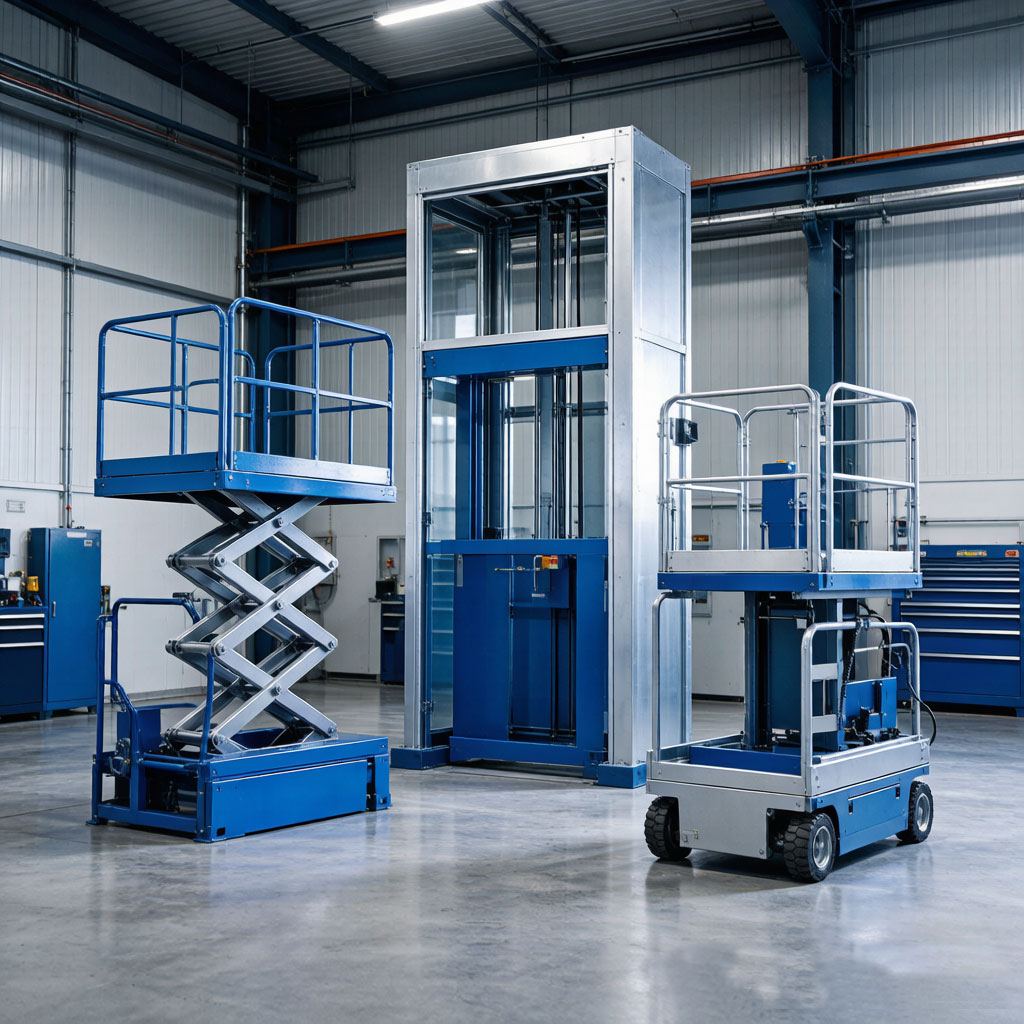
Aiming at the price of a seven-story, 1,000-kilogram home elevator, this article systematically compares the budget ranges of traction, hydraulic, and screw elevators, analyzes the five major influencing factors such as brand, shaft, and configuration, and shares two real project cases to help owner
How much does a 1,000 kilogram home elevator cost for the seventh floor?First understand the price structure
When many villa or duplex residents choose a home elevator, their biggest concern is budget.With seven floors and a load capacity of 1,000 kilograms, it is a large-tonnage home elevator configuration and is suitable for families with large populations or scenes that need to carry wheelchairs and strollers.The market price of this type of elevator spans a wide range, ranging from more than 100,000 to more than 400,000, depending on the elevator type, brand, configuration and shaft conditions.
The price of a home elevator mainly consists of three parts: the cost of the equipment itself, the cost of the installation project, and the cost of the shaft supporting facilities.The equipment body is the core, accounting for 50% to 60% of the total cost; the installation cost accounts for about 20% to 30%, involving shaft reinforcement, electrical access and debugging; the shaft part will incur additional costs depending on the site conditions. If there is an existing shaft, the cost can be significantly saved.
Price comparison of three mainstream types at a glance
At present, there are three main categories of home elevators in the market: traction type, hydraulic type and screw type. They differ in price, performance and applicability.The following table is the market reference price range for the seven-layer, 1,000-kilogram specification, allowing owners to understand their budget range in advance.
| Elevator type | Equipment price (10,000 yuan) | Installation cost (10,000 yuan) | Total budget reference | Suitable for the scene |
|---|---|---|---|---|
| Traction | 12-20 | 3-5 | 15-25 | There is a shaft or a shaft can be built |
| Hydraulic | 15-25 | 4-6 | 19-31 | Machine roomless requirements |
| screw type | 22-35 | 5-8 | 27-43 | Hoistway space is limited |
As can be seen from the table, the traction elevator is the most cost-effective and suitable for most families; the hydraulic elevator operates smoothly but has slightly higher maintenance costs; the screw elevator has the lowest requirements for the shaft and is suitable for the renovation of old houses, but the equipment is the most expensive.
What does it mean to carry a load of 1,000 kilograms?
The load capacity of 1,000 kilograms is relatively large among home elevators, and standard home elevators are mostly 400 to 630 kilograms.1000 kg can carry about 12 to 13 adults, or comfortably accommodate a wheelchair and two accompanying persons, especially suitable for families with elderly or disabled members.Large loads require higher strength of guide rails, wire ropes or hydraulic cylinders, which is one of the reasons for the price increase.
Five key factors that influence your final quote
- Brand selection:First-tier brands (such as Otis, Mitsubishi, and Hitachi) have a significant premium, while domestic brands (such as Kangli, Guangri, and Ruyi) are more affordable, with a difference of up to 30% to 50%.
- Shaft conditions:The existing concrete shaft has the lowest cost; the brick-concrete structure needs to be reinforced; the steel frame shaft requires an additional budget of 80,000 to 150,000 yuan.
- Stop floor and door opening methods:Seven floors and seven stations are the standard configuration. If the door width is increased or a central split door is selected, the price will increase by 5,000 to 15,000 yuan.
- Decoration and Decoration:Car materials (stainless steel, wood grain, glass) vary greatly, and high-end decoration can cost an additional 20,000 to 50,000 yuan.
- Installation cycle and service:Regular manufacturers include warranty and maintenance services, and although the price is slightly higher, it saves you trouble in the future; low-price plans often shrink in the maintenance process.
Warm reminder:When choosing a home elevator, don't just look at the equipment quotation. Be sure to confirm whether transportation, installation, shaft survey and first-year maintenance are included to avoid hidden charges in the future.
How to rationally control the budget?
For a seven-story, 1,000-kilogram home elevator, it is recommended that owners do three things in advance: first, conduct an on-site survey to confirm the shaft size and load-bearing structure; second, compare the plans of at least three manufacturers, focusing on the configuration details rather than a single total price; third, reserve 10% to 15% of the contingency budget to deal with uncertainties in installation.Jinan Xinhanfeng Machinery Equipment Co., Ltd. provides professional surveys and one-stop solutions. Welcome to consult and get personalized quotations.
FAQ
What is the minimum budget for a 1000kg seven-story home elevator?
If you choose a domestic brand traction elevator and have a standard shaft, the total budget can be controlled at about 150,000 yuan; if you need to customize the shaft or choose high-end configurations, the budget needs to be increased to more than 250,000 yuan.
Is a home elevator with a load capacity of 1,000 kg sufficient for home use?
Very adequate.1000 kg can carry 12 to 13 people, which is more than enough for ordinary families, especially suitable for villa families with elderly people, wheelchair users or multi-generational households.
What is the difference between hydraulic and traction home elevators?
The traction type relies on wire rope traction and has fast running speed, low energy consumption, and moderate maintenance costs; the hydraulic type relies on hydraulic cylinder drive, which runs smoothly but has high fuel consumption. It is suitable for machine room-less scenarios. Both types have their own advantages and disadvantages.
Does installing a seven-story home elevator in an old house require changes to the building structure?
This depends on the structure of the house.If there is a reserved shaft, there is no need to make major changes; if there is no shaft, it is usually necessary to build a steel structure shaft or build it attached to the external wall. It is recommended that a professional engineer issue a plan after on-site survey.
How long does it usually take to install a home elevator?
The overall cycle from survey, design, production to installation and commissioning is about 45 to 75 days; of which equipment manufacturing takes 30 to 50 days, and installation and commissioning takes about 10 to 15 days.
How much does it cost to maintain a home elevator every year?
Regular maintenance costs are about 3,000 to 8,000 yuan per year, depending on the type of elevator, frequency of use and content of the maintenance contract. It is recommended to choose a maintenance package that includes regular inspections.
Is it worth it that screw elevators are so much more expensive than traction elevators?
Screw elevators have extremely low shaft size requirements and do not require pits and machine rooms, making them suitable for renovations in old houses with limited space.If conditions permit, the traction type is more cost-effective; if the shaft is restricted, the screw type is a more practical choice.
Case
Case 1: Seven-story traction elevator project in a villa in Jinan
The owner is a resident of a townhouse in Licheng District, Jinan. The house has seven floors. He hopes to install a home elevator with a load of 1,000 kilograms for the elderly to use for daily travel.After on-site investigation, it was found that the owner already had a brick-concrete shaft, the size of which met the requirements of a traction elevator.In the end, a domestic first-line brand traction machine roomless elevator was selected. The equipment price was 168,000 yuan, the installation and shaft reinforcement costs were 42,000 yuan, and the total budget was 210,000 yuan. It took 52 days from signing to delivery, and the owner was highly satisfied.
Case 2: Installation of screw elevator in a duplex residential building in Qingdao
An owner in Qingdao installed a home elevator in a second-hand house. The house already has four and a half floors. The owner plans to add it to seven floors in the future. He will first install a screw elevator that supports seven floors and has a load capacity of 1,000 kilograms.Since the original building has no reserved shaft and the space is small, the screw elevator does not require a pit and is a self-supporting structure, becoming the optimal solution.The total cost of equipment and installation is 365,000 yuan, and the construction period is 40 days. The elevator shaft is reserved for subsequent additional floors.
Authoritative citation
"GB/T 21739.1-2023 Safety Specifications for the Manufacturing and Installation of Home Elevators"
"T/CECS 837-2021 Technical Regulations for Home Elevator Engineering"
China Elevator Association's "White Paper on the Development of the Home Elevator Industry in 2024"