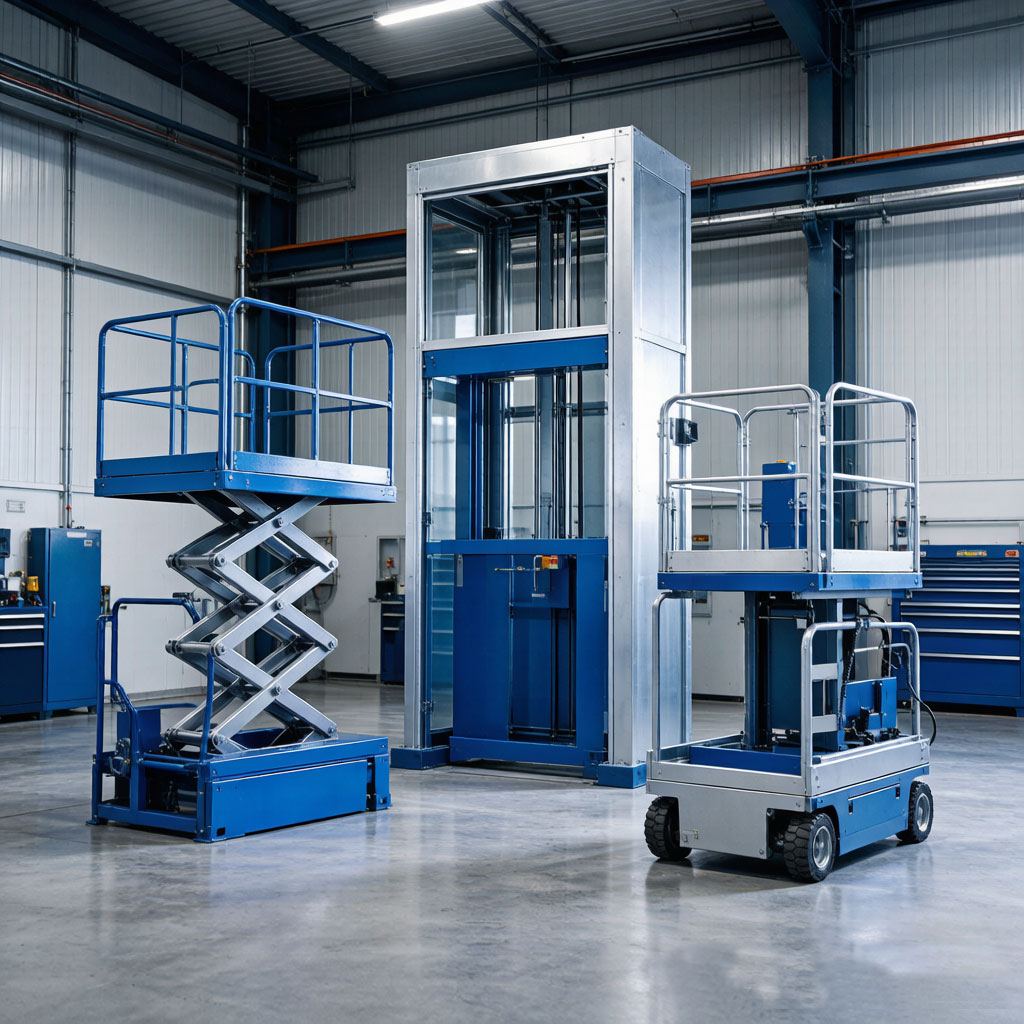
The prices of two-story home elevators vary greatly due to different driving methods, brand positioning and personalized configurations. The mainstream price range in the market is 80,000 to 220,000 yuan.Traction elevators are the most cost-effective, screw elevators are suitable for apartments with
What factors affect the price of a second-floor home elevator?
Installing a home elevator in a two-story residence has become an upgrade option for more and more families, and price is often the core issue that owners are most concerned about.In fact, the price of a second-floor home elevator is not a fixed value, but is determined by a number of key factors.First of all, the driving method of the elevator is the primary factor that affects the price. Currently, the mainstream driving methods in the market include traction type, hydraulic type and screw type. The cost structure of each technical route is obviously different.Secondly, brand selection is crucial. The price gap between domestic first-tier brands and imported high-end brands can be several times higher.In addition, individual requirements such as car size, decorative materials, roof height and shaft conditions will also directly affect the final quotation.
Analysis of the mainstream price range of second-floor home elevators
According to the current market conditions, the overall price of two-story home elevators can be roughly divided into three grades.The price range of economical products is between 80,000 yuan and 120,000 yuan. Most of these products are domestic traction elevators, equipped with basic functions, and are suitable for families with limited budgets and good shaft conditions.The price range of mid-to-high-end products ranges from 120,000 yuan to 200,000 yuan. They are equipped with more stable drive systems, intelligent controls and better car decoration. They are the first choice for most two-story villa families.The price of imported brand or customized luxury products is more than 200,000 yuan. They are usually from first-tier European brands and feature extremely low noise, high-precision design and top-level decoration options.
Comparison of performance and price of different types of elevators
In order to help owners make a clearer choice, the following comparison table summarizes the core parameters and reference prices of the three mainstream driving methods:
| Drive type | Applicable shaft dimensions | Noise level | Reference price range | Maintenance cost | ||||||||||
|---|---|---|---|---|---|---|---|---|---|---|---|---|---|---|
| Traction | Not less than 1400mm×1400mm | Low (about 45 dB) | 80,000 to 150,000 yuan | low | screw type | Not less than 1000mm×1000mm | Very low (about 40 decibels) | 120,000 to 220,000 yuan | medium | |||||
| Hydraulic | Not less than 1500mm×1500mm | Medium (about 50 decibels) | 100,000 to 180,000 yuan | higher |
It is recommended that when choosing an elevator, owners should not only use price as the only decision-making criterion, but should comprehensively consider the brand's after-sales service, local maintenance capabilities, and long-term safety and reliability.
How to scientifically control the budget of a second-floor home elevator
The key to controlling your budget is planning ahead and making reasonable trade-offs.First of all, by reserving the location of the elevator shaft during the house design stage, you can avoid additional costs incurred by later modifications.Secondly, choose the appropriate car size based on the actual height of your family members and wheelchair access needs to avoid waste caused by over-configuration.Thirdly, choose suppliers with local service outlets and brand authorization qualifications to ensure timely response to after-sales maintenance.Finally, pay attention to whether manufacturers launch discounts during holidays or promotions, which can often save thousands of dollars in budget.Jinan Xinhanfeng Machinery Equipment Co., Ltd. recommends that before purchasing a home elevator, you should consult at least three regular manufacturers to obtain detailed quotations and make a comprehensive comparison.
FAQ
How long does it usually take to install a second-floor home elevator?
From signing the contract to formal delivery, it usually takes 45 to 60 working days, including on-site survey, customized production, transportation, installation, acceptance and commissioning, etc.
Can a home elevator be installed in a two-story house without a reserved shaft?
Absolutely.Home elevators support a variety of installation methods, including integrated designs without shafts. They can use indoor corners or stairwell spaces for customized installations, and the requirements for building conditions are relatively loose.
Is the subsequent maintenance cost of a second-floor home elevator high?
Routine maintenance costs are low, generally between 800 and 1,500 yuan per year, which mainly cover regular inspections, lubrication and parts wear assessment. The specific costs vary by brand and model.
Can the second floor elevator accommodate wheelchair users?
Yes, choosing a home elevator with a car width of not less than 1100 mm and a depth of not less than 1200 mm can meet the needs of wheelchairs for entry and exit. Some brands also provide barrier-free special models.
Can the elderly and children at home use a second-floor home elevator safely?
Regular home elevators are equipped with multiple safety protection mechanisms, including electromagnetic door locks, anti-hand pinch devices, emergency call systems and backup power supplies. The elderly and children can use them safely when accompanied by a guardian.
How long does it take to replace the main components of a two-story home elevator?
Under the premise of normal use and regular maintenance, the service life of the main components of a home elevator can reach 15 to 20 years, and core components such as frequency converters and control cabinets can usually be used for more than 10 years.
Case
Installation case of traction elevator in a two-story villa in Jinan
The client is located in Licheng District, Jinan City, and has a two-story self-built villa with an area of 280 square meters.The owner's budget is between 100,000 yuan and 130,000 yuan, and he hopes to install a home elevator that is quiet, safe and easy for the elderly to use.After on-site survey, the reserved space for the stairwell of the owner's home is 1500mm×1600mm, which is suitable for installing a traction home elevator.Finally, the domestic first-line brand traction elevator recommended by Jinan Xinhanfeng Machinery Equipment Co., Ltd. was selected, including basic car decoration and intelligent calling system. The total cost was 118,000 yuan, including installation and three-year maintenance services.The project took only 52 days from contract signing to acceptance and delivery. The owner was very satisfied with the smooth operation and noise control.
Customized screw elevator case for a duplex residential building in Qingdao
The client is located in a duplex apartment in Shinan District, Qingdao City. Due to building height restrictions and compact space, it is impossible to reserve a traditional well.The owner has an elderly person with limited mobility in his home who urgently needs an elevator that does not take up space and is quiet.After on-site evaluation by technicians, it is recommended to install a screw-type home elevator. The car size is customized to 1000mm × 1200mm. There is no need for a machine room and pit, and the overall height is controlled within 2800mm.The final project total cost was 165,000 yuan, including customized car interiors and intelligent security systems.After the installation was completed, it only took 15 days to complete the commissioning. The elderly can travel independently and safely. Customers spoke highly of the service efficiency and professionalism.
Authoritative citation
China Elevator Association "Home Elevator Safety Technical Specifications" T/CECS 824-2021
National standard GB/T 21739-2021 "Safety Specifications for the Manufacturing and Installation of Home Elevators"
Ministry of Housing and Urban-Rural Development's "Residential Design Code" GB 50096-2011 Relevant requirements for barrier-free access