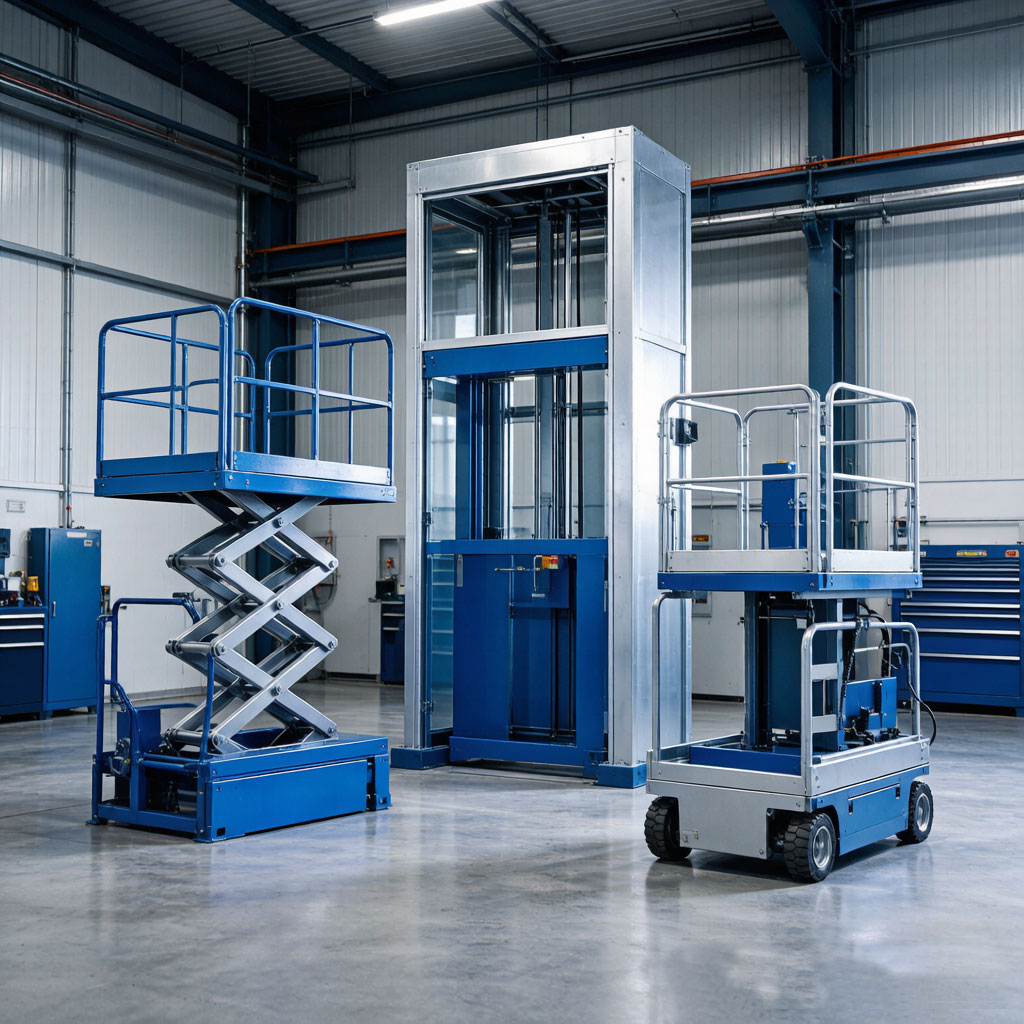
According to national standards, the safe operating specifications, daily maintenance points and common troubleshooting methods of hydraulic lifting platforms are sorted out to help enterprises use lifting equipment safely and compliantly.
Hydraulic lifting platforms are widely used in factories, warehouses, logistics centers and other places, and belong to the category of special equipment. Improper operation may cause safety accidents. According to statistics from the State Administration for Market Regulation, about 65% of lifting equipment-related accidents nationwide in 2025 will be related to irregular operation or inadequate maintenance. This article systematically sorts out the safety operating specifications of hydraulic lifting platforms based on national standards.
1. Safety operating regulations
Operator requirements:According to the "Special Equipment Safety Law" and the "Measures for the Supervision and Management of Special Equipment Operators", operators of hydraulic lifting platforms should undergo professional training and master equipment operating procedures and emergency response methods. Although some small lifting platforms do not fall within the scope of compulsory certification, it is recommended that enterprises develop an internal certification system.
Check before work:The following items must be checked before operation:
- Is the hydraulic oil level normal and is there any leakage in the pipeline?
- Whether all safety protection devices (overload protection, limit switch, emergency stop) are intact
- Are there any abnormalities in key components such as guide rails, wire ropes, and chains?
- Is the platform surface clean and free of debris and oil stains?
Precautions during operation:
- Overload operation is strictly prohibited, and the load shall not exceed 110% of the rated load.
- Goods should be placed evenly to avoid uneven loading
- During the lifting process, personnel are strictly prohibited from climbing or reaching under the platform.
- If you find abnormal vibration, noise or smell, stop the operation immediately and report for repair.
2. Main national standards involved
| Standard number | Standard name | Main content |
|---|---|---|
| GB/T 3811-2008 | Crane design specifications | Basic requirements for lifting platform design |
| GB/T 40160-2025 | Safety Technical Specifications for Lifting Work Platforms | Safety devices and protection requirements |
| GB/T 21739-2008 | Specifications for the manufacture and installation of home elevators | Safety requirements for home elevators |
| JB/T 9229-2013 | Scissor lift platform | Scissor type product technical conditions |
| GB 50017-2017 | Steel structure design standards | Steel structure platform design basis |
3. Key points of daily maintenance
Hydraulic system maintenance:
- Replace the hydraulic oil after the first 100 hours of use, and then every 6 months or 500 hours.
- Regularly check oil pipe joints and seals, and replace them promptly if leakage is found
- The hydraulic oil temperature is controlled at 30-60°C. If it is too high, the machine will be shut down for cooling.
Mechanical component maintenance:
- The guide rails and guide wheels should be inspected once a month and the clearance should be adjusted in time.
- Inspect the wire rope once a quarter and replace it immediately if any broken wire or excessive wear is found.
- All hinge points and bearings should be greased quarterly
Electrical system maintenance:
- Check the insulation condition of electrical circuits every month to prevent aging and leakage
- Limit switches and safety switches are tested for sensitivity once a month
- Keep the control box dry and clean to prevent dust and scale accumulation
4. Emergency response
Emergency stop:Press the emergency stop button to cut off the power source and stop the platform. The emergency stop button needs to be manually reset during recovery.
Manual descent:Hydraulic lifting platforms are usually equipped with a manual pressure relief valve, which can be slowly lowered by manual operation in the event of a power outage or malfunction.
Fault alarm:It is recommended to have a 24-hour after-sales service hotline. When a fault occurs, do not disassemble and repair it by yourself. You should contact the manufacturer's after-sales team in time.
(Reference standards: GB/T 3811-2008, GB/T 40160-2025, GB/T 21739-2008)