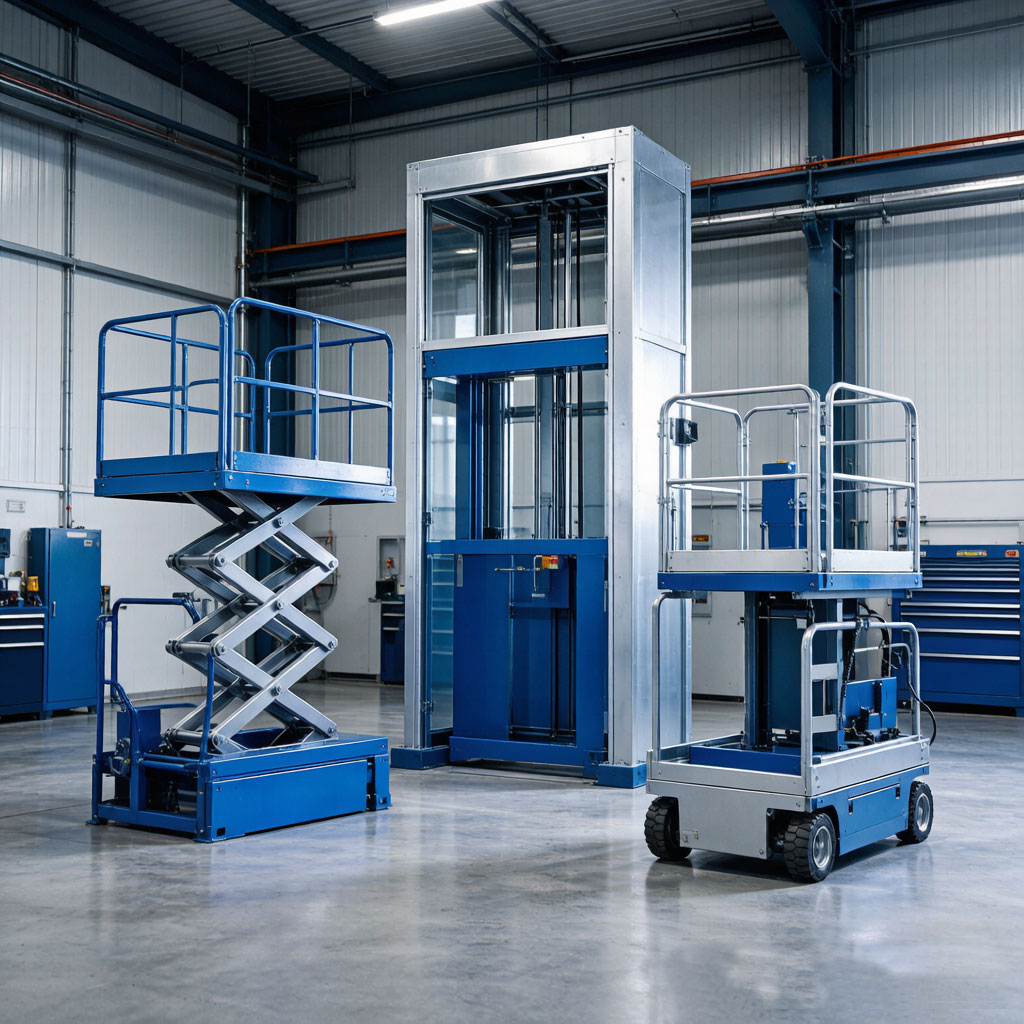
Comprehensively analyze the main types, price ranges, installation conditions, and safety standards of home elevators, and provide practical home elevator purchase references for villa and self-built house owners.
With the improvement of living standards and the aging of the population, home elevators have gradually become standard equipment for villas and self-built houses. In 2025, the domestic home elevator market will exceed 12 billion yuan, a year-on-year increase of 18%. This article comprehensively analyzes the key points for purchasing home elevators from the four dimensions of type, price, installation, and safety.
1. Main types of home elevators
Hydraulic home elevator: Hydraulically driven, it operates smoothly, has high safety, and has low requirements for the shaft. It can be installed in spaces such as the middle of stairs or corners. The load capacity is 250-400kg, the speed is 0.15-0.3m/s, and it is suitable for 2-5 storey residences. The advantages are solid structure, high cost performance and simple maintenance.
Traction home elevator: Using traction motor + steel wire rope/steel belt drive, low operating noise, energy saving and environmental protection. It is necessary to reserve space for the shaft and machine room, which is suitable for new villas. The speed is 0.3-0.5m/s, and the operating experience is closer to that of commercial elevators.
Screw home elevator: It is driven by screw and nut, with compact structure, smallest floor space (can be as small as 0.8㎡), and no need for a special shaft. However, the running speed is slow (0.1-0.15m/s), and the maintenance cost is high after the screw is worn.
2. Price range reference
| Type | Price range (10,000 yuan) | Applicable scenarios |
|---|---|---|
| Hydraulic home elevator | 8-15 | Villas and self-built houses are cost-effective choices |
| Traction home elevator | 12-20 | Newly built villas, pursuing operational quality |
| Screw home elevator | 10-18 | Renovation of old houses with limited space |
Note: The above price includes equipment and installation costs, and does not include the cost of shaft civil engineering modification. The specific price is subject to the manufacturer's quotation.
3. Installation conditions
Shaft requirements: Hydraulic home elevators can be installed in stairwells, corners and other spaces without the need for a dedicated shaft; the traction type requires a dedicated shaft (recommended size ≥1.2m×1.2m); the screw type requires the smallest footprint, 0.8-1.2㎡.
Civil engineering requirements: The depth of the pit is generally 10-30cm (the hydraulic pit is shallow), and the top height is ≥2.5m. It is recommended to complete the elevator installation plan before renovation, which can save a lot of civil engineering renovation costs.
Power requirements: Household 220V single-phase power supply is enough, and the power consumption is about 2-3kW, which is equivalent to ordinary air conditioners.
4. Safety standards
Home elevators should comply with the standard GB/T 21739-2008 "Manufacturing and Installation Specifications for Home Elevators" and must be equipped with the following safety devices:
- Anti-fall safety gear (hydraulic type can use speed limiting valve to prevent falling)
- Overload protection device
- emergency stop button
- Door lock protection (the elevator cannot run when the landing door and car door are not closed)
- Emergency call device (can maintain calls when power is cut off)
5. Suggestions for selection
For owners with limited budget and completed decoration, it is recommended to choose a hydraulic home elevator, which is flexible in installation and cost-effective; for newly built villas pursuing operational quality, the traction type is recommended; for renovation of old houses with extremely limited space, the screw type can be selected. No matter which type you choose, be sure to confirm the manufacturer’s qualifications and complete after-sales service system.
(Reference standards: GB/T 21739-2008 "Manufacturing and Installation Specifications for Home Elevators", GB/T 7588-2020 "Safety Specifications for Elevator Manufacturing and Installation")