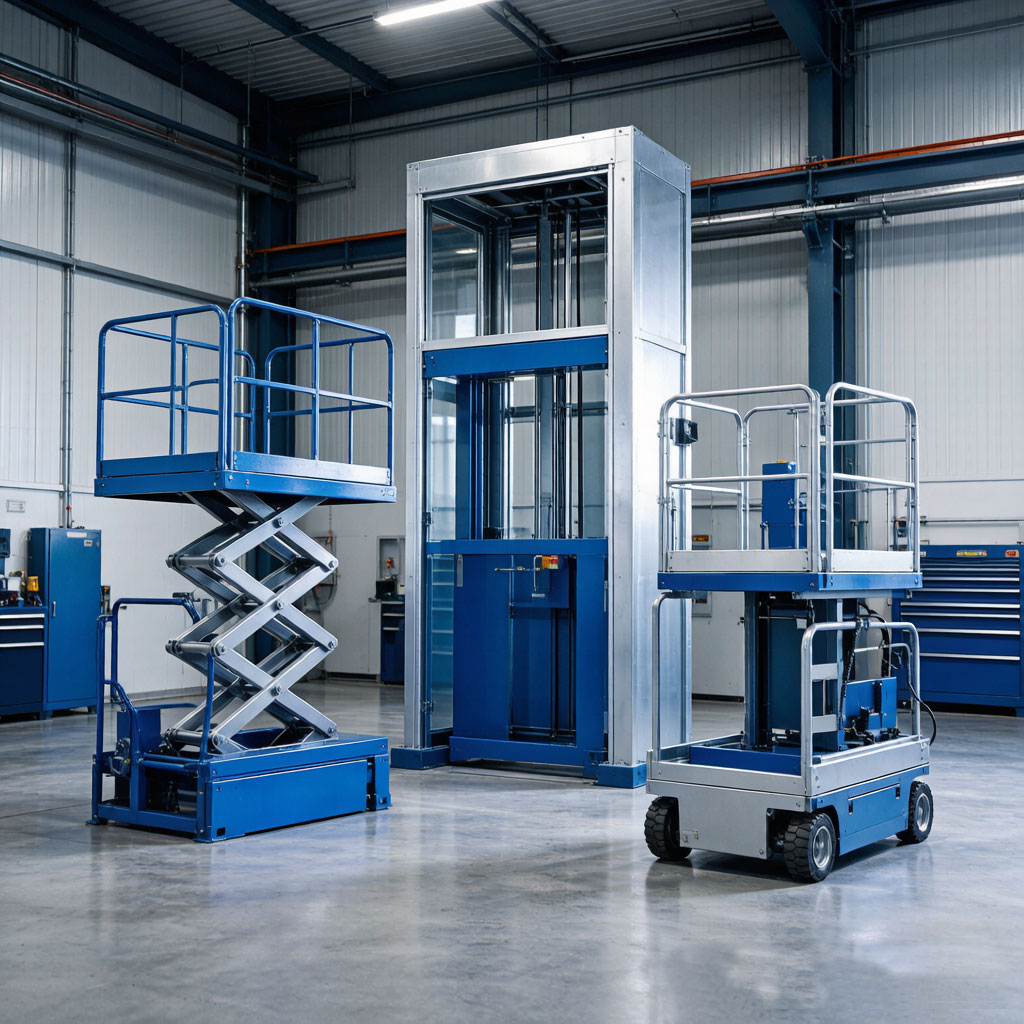
This article analyzes the development trends of the lifting equipment industry in 2026 from the three dimensions of market size, technology trends, and policy environment, and provides reference for purchasing decisions on lifting platforms, freight elevators, home elevators, and other equipment.
As my country's urbanization process continues to advance and the manufacturing industry transforms and upgrades, the lifting equipment industry will usher in new development opportunities in 2026. According to data from the China Construction Machinery Industry Association, national sales of lifting work platforms will increase by about 12% year-on-year in 2025, with the market size exceeding 80 billion yuan, of which hydraulic lifting platforms will account for more than 60%. This article analyzes industry trends from three dimensions: market, technology, and policy.
1. Market demand continues to expand
The lifting equipment market will present three major growth engines in 2026:
1. Logistics and warehousing field.According to data from the National Bureau of Statistics, the total social logistics volume in the country will exceed 360 trillion yuan in 2025, and investment in the construction of warehousing and logistics facilities will increase by 8.5% year-on-year. The construction of automated three-dimensional warehouses and sorting centers has driven the growth in demand for rail-type hydraulic lifting platforms and mobile unloading platforms.
2. Renovation of old residential areas.Data from the Ministry of Housing and Urban-Rural Development show that in 2025, 56,000 old urban communities will be newly renovated across the country, and the demand for installing elevators will continue to increase. Among them, hydraulic home elevators with no machine room and small footprint have become a popular choice for the renovation of villas and old communities.
3. Manufacturing upgrade.The Ministry of Industry and Information Technology's "Intelligent Manufacturing Development Plan" proposes that the penetration rate of digital R&D and design tools in manufacturing enterprises above designated size will exceed 80% in 2026. The automation transformation of factory production lines has significantly increased the demand for equipment such as freight elevators and scissor lifts.
2. Technology development trends
Lifting equipment technology will show the following directions in 2026:
Intelligent upgrade.Internet of Things (IoT) technology is widely used in hydraulic lifting platforms, which can realize remote monitoring, fault warning, operation data collection and other functions, significantly reducing maintenance costs. According to industry research, the failure response time of lifting platforms equipped with intelligent systems has been shortened by 60%.
Energy saving and environmental protection.As the country advances its dual-carbon goals, energy-saving hydraulic systems and electric drive solutions have become mainstream. The new generation of hydraulic lifting platform uses frequency conversion control technology to reduce energy consumption by 20%-30% compared with traditional models.
Safety standards are improved.The "Safety Technical Specifications for Elevating Working Platforms" (GB/T 40160-2025), which will be implemented in 2025, puts forward higher requirements for safety configurations such as anti-fall devices, overload protection, and emergency stops, further raising the industry entry threshold.
3. Regional market structure
From the perspective of regional distribution, East China (Shandong, Jiangsu, Zhejiang, Shanghai) accounts for about 40% of the national lifting equipment market. Shandong Province, as a major equipment manufacturing province, has obvious industrial cluster advantages in the field of hydraulic lifting platforms. Jinan, Jining, Dezhou and other places have formed a relatively complete lifting equipment industry chain.
4. Industry Outlook
Taken together, the lifting equipment industry will maintain a growth rate of 8%-12% in 2026, and the total market volume is expected to exceed 90 billion yuan. Driven by the three major trends of intelligence, energy conservation, and standardization, companies with technology research and development capabilities and quality control capabilities will gain greater room for development. For purchasers, it is recommended to give priority to lifting equipment suppliers that have a complete after-sales service system and meet the latest national standards.
(Data sources: China Construction Machinery Industry Association, National Bureau of Statistics, Ministry of Housing and Urban-Rural Development, Ministry of Industry and Information Technology)